
A crossed-out triangle means no bleach, including color-safe bleach. It's easy to overlook when the same label says a garment is machine washable. Before you start a load, read the whole row of symbols: washing is only one part of caring for it.
Care labels usually list washing, bleaching, drying, ironing, and professional cleaning in that order. The shape identifies the process; dots, lines, numbers, and crosses tell you its limits. Symbols vary a little by country and labeling system, so read any written instructions too.
Read the shape before the details
| Basic shape | What it covers | First thing to check |
|---|---|---|
| Wash tub | Washing with water | Machine wash, hand wash, or do not wash |
| Triangle | Bleaching | Whether bleach is permitted and which type |
| Square | Drying | Tumble drying or a specified way to air-dry |
| Iron | Ironing and pressing | Heat level and whether steam is allowed |
| Circle | Professional cleaning | Whether a cleaner should use a specified process |
A cross through a symbol means do not use that process. One line beneath a wash or tumble-dry symbol generally calls for gentler handling; two lines mean gentler still. Dots often refer to heat, but their meaning depends on the shape around them. A dot inside an iron is about ironing, not wash temperature.
Washing symbols: water, temperature, and agitation
The tub and its markings
A plain tub permits washing with water. A number inside gives the maximum wash temperature, usually in degrees Celsius. A 30 means no hotter than 30°C; you don't have to wash at exactly that temperature. Cooler water may be fine if it gets the item clean. Some labels use dots instead of numbers. More dots mean a higher permitted temperature, though the temperature assigned to each dot varies by labeling system.
A hand in the tub means hand wash. Support the item in the water rather than scrubbing or twisting it, and don't lift a heavy, dripping knit by one shoulder. A machine's hand-wash cycle may be gentle, but it isn't automatically suitable for every hand-wash item. Follow the label's wording rather than relying on the cycle name.
A crossed-out tub means do not wash. It doesn't necessarily mean dry-clean only: check the professional-cleaning circle and any written directions. One line under a wash tub calls for a gentle or permanent-press-type cycle, depending on the system; two lines call for very gentle handling. Give the item room in the machine with a smaller load, and skip an aggressive spin when the label calls for delicate treatment.
What the label cannot decide for you
The wash symbol sets limits, but it won't sort the load. Separate items that could transfer dye, check pockets, close zippers that might snag fine fabric, and treat stains before heat sets them more firmly. Turning a printed T-shirt inside out reduces rubbing against the design. Wash a new dark or brightly colored item separately at first if dye release is a concern.
If the words and symbols seem to disagree, take the more cautious reading until you can check the manufacturer's guidance. Cold, gentle washing is often less stressful than a hot, vigorous cycle, but it doesn't override a crossed-out tub.
Bleaching symbols: the difference between types
An empty triangle generally allows bleaching when needed. Two diagonal lines inside the triangle mean non-chlorine bleach only. A crossed-out triangle means no bleach. Older labels may use other chlorine-specific markings, so don't treat every marked triangle as interchangeable.
“Color-safe” doesn't mean safe for every colored garment. These products commonly use oxygen-based bleaching agents, which still count as bleach on a care label. If the triangle is crossed out, skip them. If non-chlorine bleach is permitted, follow the product directions and don't pour it onto the fabric in concentrated form. For a stain on a no-bleach item, test a suitable non-bleach treatment on an inconspicuous area first.
Drying symbols: check these before the wash ends
Tumble drying
A square with a circle inside it refers to tumble drying. The plain symbol permits it; dots inside the circle specify heat. One dot means low, two medium, and three high where that marking is used. A crossed-out square with a circle means do not tumble dry. One or two lines beneath the symbol call for a gentler cycle.
Low heat isn't the same as no heat. Even on a dryer's air-only setting, tumbling may stress the garment. Elastic, bonded details, prints, and delicate trims can affect how you dry an item, whatever its main fabric is. Check the label before tossing a damp piece into the dryer with the rest of a mixed load.
Air-drying instructions
A square without a circle describes natural drying. One vertical line commonly means line dry; multiple vertical lines can mean drip dry, without first removing as much water. A horizontal line means dry flat, especially useful for knits that could stretch on a hanger. Diagonal lines in a corner indicate drying in the shade. Conventions vary, so use any printed words alongside the icon.
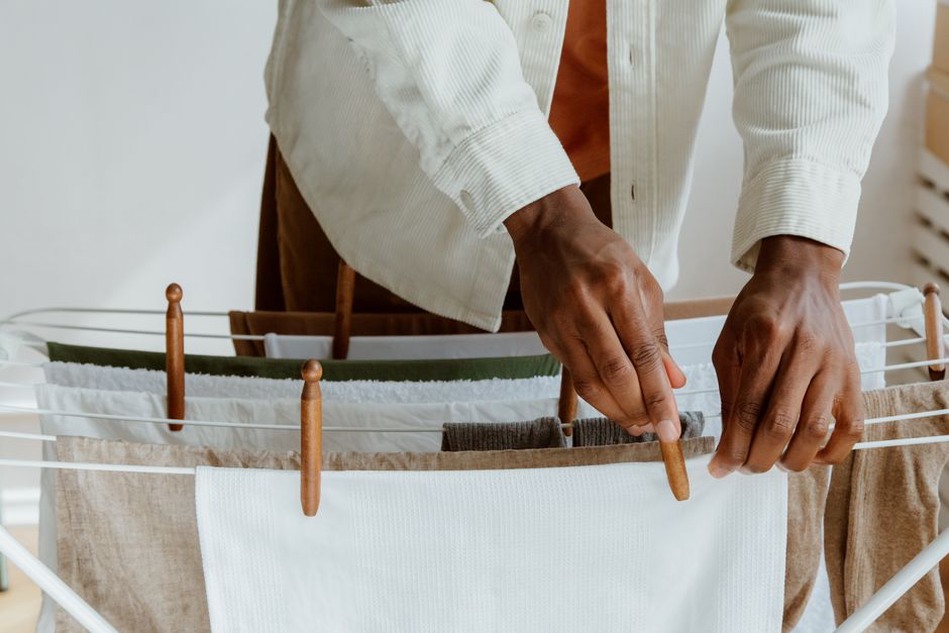
To dry flat, support the garment's full weight. Lay it on a clean, dry towel or a ventilated drying rack, gently reshape it, and turn it if the underside stays damp. A wet sweater can stretch if hung by its shoulders. When line drying, leave space for air to circulate and check whether clips could mark delicate fabric.

Ironing symbols: heat and steam are separate questions
The iron symbol sets pressing limits. One dot means low heat, two medium, and three high; a crossed-out iron means do not iron. A crossed-out steam mark beneath the iron means you may be able to iron, but without steam. Check that setting before you start, especially if your iron produces steam by default.
Let the fabric and label set the heat, rather than turning the iron up to chase a stubborn crease. If you're unsure, start low, test an inconspicuous area, and increase the heat only if permitted. When appropriate, press printed designs, embroidery, and decorative surfaces from the reverse side with a clean pressing cloth. A high-heat allowance is a ceiling, not a reason to use maximum heat on every part of the garment.
Professional-cleaning circles: what to take to the cleaner
A circle refers to professional care. Letters inside tell a cleaner which process or solvent category is permitted; they're not instructions for choosing a chemical at home. Lines beneath the circle indicate a more restricted or gentle professional process. A crossed-out circle means do not dry-clean. A W inside the circle specifies professional wet cleaning, which isn't the same as trying a home wash cycle.
“Dry clean” and “dry clean only” aren't identical written instructions. “Only” is the stronger restriction; without it, the label may name a permitted method rather than rule out every other one. Still, a valuable or structured garment isn't a good place to experiment. Show the cleaner the full label, and point out stains, loose trims, or spots you've already treated. If the wash tub is crossed out beside a professional-cleaning circle, don't put the garment in your regular wash.
Put the symbols together before choosing a cycle
Reading only the first icon can leave you with the wrong drying or pressing plan. Go left to right and make a decision for each process:
- Washing: Is washing with water allowed? Check the maximum temperature and how gentle the cycle needs to be.
- Bleaching: Is any bleach allowed, only non-chlorine bleach, or none?
- Drying: Can the item tumble dry? If not, should it hang, drip, or lie flat?
- Ironing: Is pressing allowed? At what heat, and can you use steam?
- Professional cleaning: Is it permitted, required by the written instructions, or prohibited?
Say a label shows a 30°C tub with one line beneath it, a crossed-out triangle, a crossed-out tumble-dry symbol, and an iron with one dot. That points to a gentle wash at no more than 30°C, no bleach, air drying, and low-heat ironing if needed. The crossed-out dryer doesn't tell you whether to hang or lay the garment flat. If there's no natural-drying instruction, consider its construction: a heavy knit is better supported flat than hung while wet.
Symbols describe acceptable processes; they can't account for every detergent, machine, or load. A delicate item could still snag on a hook. A laundry bag reduces contact with other garments, but it doesn't make a prohibited machine wash acceptable.
When the label is missing, faded, or confusing
Look at what you can see: fiber content, lining, structure, prints, and trims. Check whether damp fabric sheds dye. Fiber content helps, but it can't replace care instructions. Two cotton garments may have different finishes, and a lined wool-blend coat has different care needs from a simple wool scarf.
- If only part of the label is legible: Photograph or write down what's readable before it fades further. Don't guess a missing drying instruction based on another garment.
- If you removed the label: Keep a note of the instructions with a description or photo of the item, especially if it needs unusual care.
- If symbols differ from a familiar chart: Check the written instructions and the labeling system used where the garment was sold. Regional standards don't always draw every detail the same way.
- If a garment is valuable or structurally complex: Ask a qualified cleaner before testing an unmarked item in water, especially one with lining, tailoring, or embellishment.
For an ordinary unmarked item that appears washable, a cool, gentle hand wash followed by careful air drying may be a cautious trial, not a guarantee. First, test an inconspicuous area for dye transfer. Avoid soaking anything whose construction or finish you can't assess, and stop if color runs, a glued detail loosens, or the fabric's texture changes.
Make a label easier to use next time
You don't need to memorize every icon. Check the label before buying something with a delicate finish, then again before its first wash. If the instructions are unusually specific, take a clear phone photo while the print is still legible, plus a second shot that identifies the garment.
For a sweater labeled hand wash, no bleach, dry flat, and do not iron, support it with both hands as you lift it from the water. Press out excess moisture in a towel without wringing, then lay it flat and ease it back into shape. Leave the iron unplugged.


