
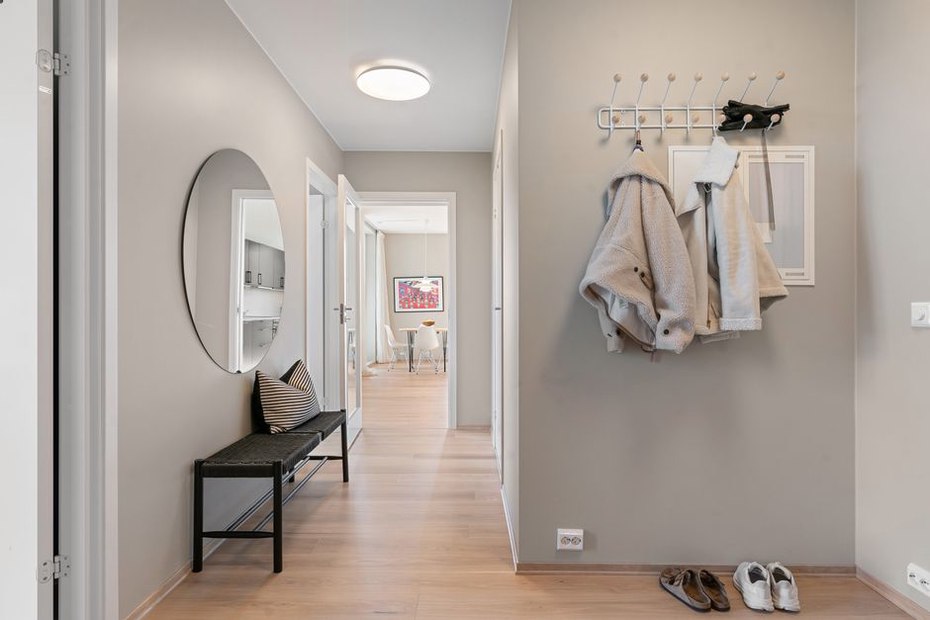
If the door catches on a pile of shoes, clear the floor before thinking about decor. In a small entryway, you need room to open the door, step inside, close it, and take off a coat. That patch of open floor does more work than another piece of furniture.
Before adding a shelf or basket, notice what lands near the door over a few days: keys, wet umbrellas, outgoing mail, a dog lead, or the bag you carry each morning. Give the frequent items easy-to-reach homes. Things that pass through only occasionally can live elsewhere.
Plan around the door and your daily route
Measure the wall, then measure how you use the space. Mark the door’s full swing and check where people stand to put on shoes. A cabinet may fit on paper but block a light switch or make a narrow hall awkward to pass through. Painter’s tape on the floor lets you test the footprint of a bench or shoe rack before you bring one home.
Think of the entry as three small zones:
- Arrival: a dependable place for keys and the bag you set down first.
- Changeover: space for shoes, coats, and anything needed to leave again.
- Departure: a visible spot for items that must go out with you.
All three can share one wall. What matters is keeping clean, dry essentials away from damp shoes and umbrellas—and keeping an outgoing parcel from vanishing under everyday clutter.
Make the walls work, without crowding them
In a tight entry, hooks are often easier to use than a row of hangers. Put them where the people using them can reach, with enough room that coats do not cover the door trim or bury one another. A lower hook or two helps children put away their own bags. Above the hooks, a shallow shelf can hold accessories you use less often, as long as it is securely installed and stays out of the walking path.
Choose fixings for the wall material and the weight they need to hold. A heavy backpack needs a more secure anchor than a cap; use adhesive hooks only for items within their stated weight limit. Renting? A freestanding coat stand or over-door rack might work, but check that the door still closes properly.
Choose one reliable landing spot
A small tray on a narrow console or wall-mounted ledge gives keys, transit cards, and sunglasses a boundary. If a shelf sticks out too far, use a hook for keys instead. Place it where your hand naturally goes when you come in; an organizer across the hall will not help much if you drop everything before you reach it.
Wall pockets are handy for outgoing letters, but give each one a job. A single pocket labeled “take out” is easier to act on than several slots that slowly fill up. If you enjoy paper crafting, try a laminated or covered cardstock label. Attach it so you can swap it out when your routine changes.
Give shoes a limit and a drying place
Shoes take up floor space quickly, even when the pairs are tidy. Keep only those in regular rotation by the door, then choose storage that fits how you use them. A low open rack makes pairs easy to find and lets damp shoes air out. A closed cabinet hides clutter, but wet footwear needs to dry before it goes inside. A boot tray catches drips and grit; make sure you can lift it out and clean it without shifting all the furniture.
A bench helps if you like to sit while changing shoes, but it may be too deep for a narrow passage. Test its footprint with tape and, if you can, check the height with a chair. If a bench blocks the way, a sturdy stool that tucks under a console may be enough. Keep shoes out of required exit routes and anywhere they could trip someone in low light.
Make small storage easy to maintain
Entry storage works best when you can see what is there or open it with one hand. Baskets can hold gloves or reusable shopping bags; broad categories are easier to keep up than detailed sorting rules. Try one container per type of item, with a little spare room so you can put things away without rearranging everything.
- Empty the immediate doorway. Move everything out for a moment and wipe the floor so you can see the space you have.
- Return daily-use items first. Give each one a reachable home near where you use it.
- Relocate backups. Spare hats, out-of-season coats, and extra shoes usually belong in a closet or another room.
- Test for a week. Notice what still lands on the floor, then move a hook, tray, or basket before adding more storage.
Add a small wastebasket only if receipts or packaging regularly collect by the door and someone can empty it. Otherwise, it is one more thing to step around. Decorative baskets need a job, too—not just a matching color.
Use light and visual cues deliberately
Check whether the existing light reaches the key tray and shoe area, not just the middle of the ceiling. A wall light or compact lamp may help if wiring and outlet placement allow; keep cords out of the walkway. A mirror can make a narrow entry feel more open and give you a last check before leaving. Position it where it will not get in the way of hooks or reflect harsh glare.
Color can help organize the space without filling it with objects. Matching hooks or a restrained set of basket labels keeps things easy to read; one bright tray can make keys easier to spot against a quiet background. Save paper-craft details for dry spots. A stamped card in a simple frame could mark the departure shelf, while patterned paper in a clear label holder could identify each person’s hook. Keep paper away from wet coats and umbrellas, and choose wipe-clean materials for anything touched with damp hands.

Fit the plan to the kind of entry you have
No separate foyer? Choose pieces that sit comfortably with the adjoining room, such as a slim console behind a sofa and hooks near the door. In a narrow hall, favor wall-mounted storage and keep protruding corners out of the walking line. If the door opens straight into a kitchen, a washable mat and a contained shoe area can help keep grit away from food-preparation surfaces.
In a shared entry, assign hooks by person or item type and agree on how many coats stay by the door. If you live alone, the trickier items may be returns, gifts, or paperwork with no next destination. Give them one clearly marked spot and clear it when you next go out.
Budget choices depend on your space and what you already own, so treat spending suggestions as a general guide, not personal financial advice. Move an existing tray, hook, or washable mat into place before buying a matching set. Tonight, put an empty tray where you usually drop your keys. If they keep landing in it over the next few days, leave it there.


