
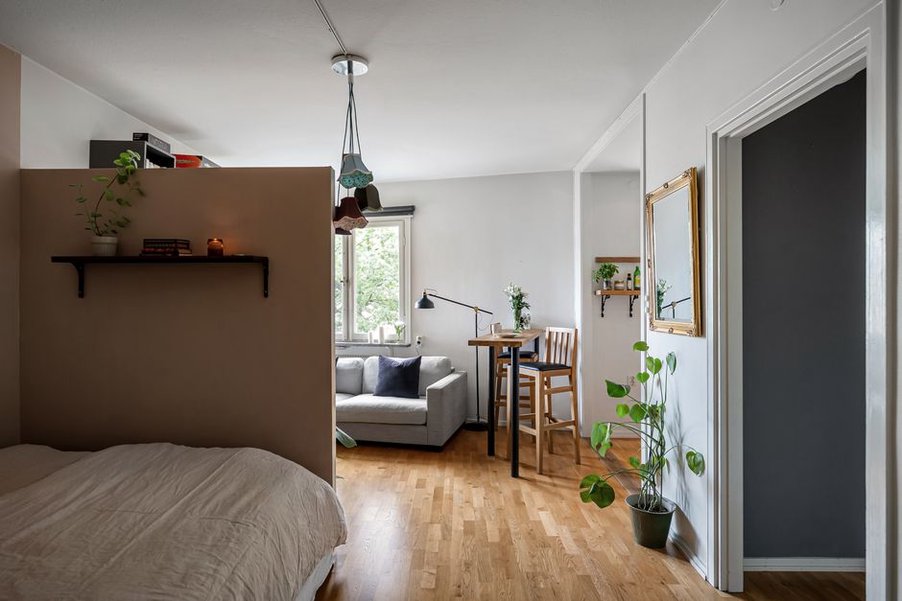
If you have to edge around the coffee table to reach the sofa, the room will feel tight no matter how tidy the shelves are. Walk the routes you use most: doorway to sofa, seating to window, or across the room to a craft cart. Before you change the décor, see what happens when you move one piece of furniture a few inches.
Start with the floor plan you actually use
Sketch the room, including doors, windows, radiators, outlets, and furniture. Mark your usual walking routes and the space drawers and cabinet doors need to open. If people have to turn sideways between the sofa and coffee table, try a narrower table, two small nesting tables, or no central table. Painter’s tape lets you test a new footprint before you move heavy furniture or buy anything.
There’s no rule that every seat has to sit against a wall. Pulling a sofa slightly forward might make room for a slim console or lamp behind it. In another room, keeping furniture near the perimeter may leave the clearest path through. Follow the room, not a fixed layout.
Give each piece a reason to stay
Think about what a piece of furniture does as well as the floor space it takes. A compact ottoman with a firm tray can be a footrest and an occasional table. A side table with a shelf might hold current magazines or card-making supplies, saving you another storage unit. But if you have to clear a storage bench every time you open it, it may end up collecting piles.
Scale matters too. One large sofa can look calmer than several small chairs because there are fewer separate pieces in view. On the other hand, wide sofa arms can eat up space without adding seating. Measure the usable seat width, not just the overall footprint.
Make light travel farther
Daylight helps you see the edges of a room. Keep tall furniture away from windows where you can, and check whether open curtains still cover part of the glass. A rod wider than the window gives the panels somewhere to rest beside the frame. If you need privacy, sheer curtains can soften the view while letting light through.
After dark, one ceiling fixture may leave the corners in shadow. Try a floor lamp by the sofa and a small lamp on a shelf. If the living room is also where you work on paper projects, aim a task lamp at the work surface instead of using one harsh bulb to brighten the whole room. The guide to better home office lighting for paper crafts and screen work has more on choosing light for detailed work.
A mirror can bounce light from a window or lamp, but check the view before you hang it. Stand where you normally sit: does the mirror reflect daylight, or does it put a crowded shelf on display twice? Watch for glare on the sofa, too.
Use color to quiet visual interruptions
You don’t need white walls. A small room can feel less broken up when its large surfaces—walls, curtains, and substantial furniture—stay within a related range of tones. Warm cream and tan work together, as do muted blue-gray and soft charcoal. Dark colors can work as well; consider the lighting and the contrast between adjoining surfaces.
Save stronger color for things you like looking at: a cushion, a framed print, or a few handmade cards displayed together. It’s much like composing a card with patterned paper. A quieter background gives the detailed layers room to show. Repeat one or two accent colors around the room to connect the pieces without making everything match.
Choose a rug that relates to the seating rather than one that sits alone beneath a tiny table. If possible, set at least the front legs of the main seating on it. The rug then marks out one generous area instead of dividing the floor into small patches. Check door clearance, and use a suitable rug pad if the rug slips underfoot.
Store supplies without hiding the room
Paper, stamps, albums, blankets, and chargers all need a place to go. You don’t need an empty room; you need everyday things within reach without covering every surface. Give the easiest-to-reach storage to what you use weekly. Supplies you use less often can go higher or farther away, as long as you can lift them down safely.
- Use closed storage for mixed small items. A shallow cabinet or lidded box can hold ink pads, spare cables, and tools that make an open shelf look busy.
- Leave some space on display shelves. Group a few albums or finished projects, and let some of the shelf show.
- Choose containers that fit the shelf. Measure depth and height before buying boxes so they don’t stick into a walkway or make lower shelves hard to reach.
- Give ongoing projects one home. A tray or portable folder lets you pause a card-making session and clear the shared table without losing your place.
Vertical storage frees floor space, but taller isn’t automatically better. A deep floor-to-ceiling bookcase can feel bulky in a narrow room. A slim unit, securely anchored, may be easier to live with. Keep heavy items low, and leave vents, switches, and door swings clear.

Choose details that let your eye rest
Lots of tiny decorations can make every surface compete for attention. Group related pieces instead. A pair of framed handmade projects above a sideboard reads as one display rather than two scattered accents. Keep the arrangement within the width of the furniture below, and hang it where you can enjoy it from your usual seat.
Furniture raised off the floor shows more of the floor and can feel lighter than a solid block. You can still mix in enclosed storage where you need it. A glass table may look airy, but fingerprints, sharp corners, and the things visible through it may make it a poor fit for a busy household.
Texture brings interest without adding more objects: a woven cushion, a matte ceramic lamp, or softly woven curtains can give a restrained color scheme depth. If you display paper projects, rotate a few favorites instead of adding every new one. Store the rest flat or in albums, away from dust and direct sunlight.
Make one change, then reassess
Change one thing at a time so you can tell what helped. Clear the main walking route, then sit in your usual spot. Can you reach a drink, turn on a lamp, and get to the door without moving anything? Check the lighting at the time you normally use the room. After that, you’ll have a better sense of whether a rug, curtain, or storage piece would address what’s still bothering you.
Before buying anything, measure the spot it would occupy and tape its outline on the floor. If a side table would block a nearby cabinet door, skip it: a wall-mounted light could serve that seat while leaving the floor clear.


