
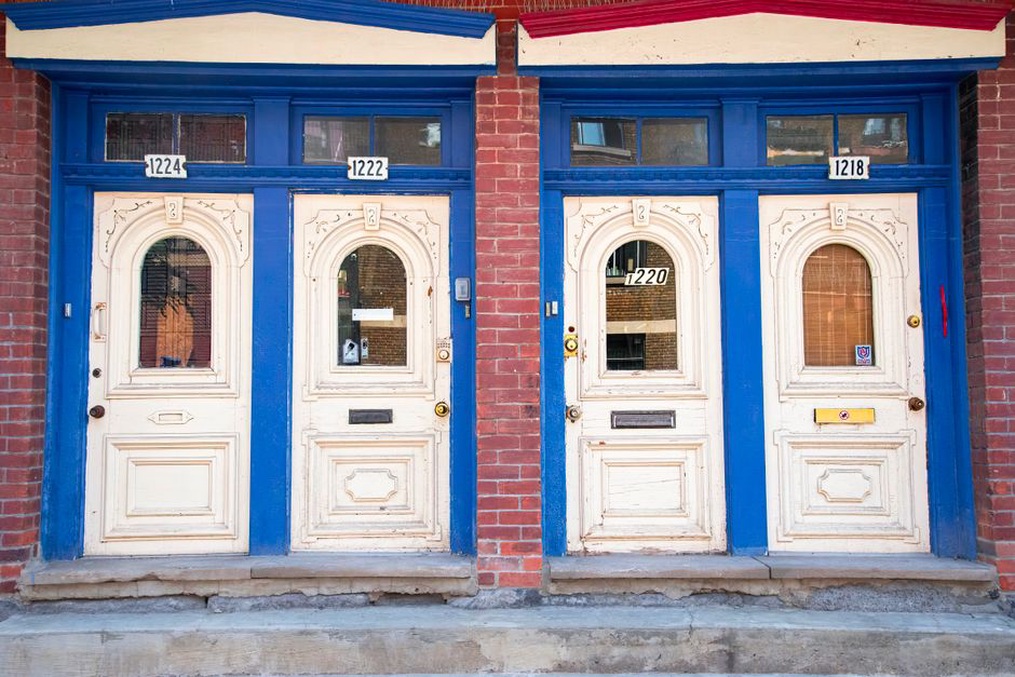
On a familiar block, try looking for one small detail: a strip of blue above a doorway, circles repeated along a fence, or afternoon shadows cutting across brick. You don't need a new destination to notice something new.
For paper crafters, a short walk can turn up color pairings, patterns, shapes, and bits of local history to use later in a card or scrapbook page. You don't have to collect ideas the whole way. One good observation is plenty.
Choose a prompt, not a complicated route
If the usual streets have begun to blur together, pick one thing to look for before you leave. Keep the prompt simple enough that you can forget about it for a few minutes and still remember it later. Try a different one on another walk:
- One color: Find three shades of green, or spot a bright color against a muted street.
- Repeating shapes: Look for arches, rectangles, circles, or zigzags in windows, railings, paving, and signs.
- Layers: Notice a new noticeboard beside an older wall, or plants overlapping steps and fences.
- Signs of a season: Watch for changes in tree canopies, porch decorations, or the angle of light.
- Letterforms: Compare public signs, street names, and painted numbers without photographing private information.
“Notice circles” is easier to carry around than “find everything interesting.” You might spot a drain cover, then a bicycle wheel, then a round window you've passed for years. On another day, skip the prompt. Wandering without a plan can feel good after a stretch of close looking.
Change only one part of a familiar walk
You can keep your usual loop and walk it in the opposite direction, take a parallel street for one block, or stop at a public corner you normally pass. A building you usually see from behind may have a patterned entrance on its other side. Morning shade can hide a color that catches your eye later in the day.
Check the crossings, accessibility, weather, and time before changing course. A detour loses its appeal if it leaves you rushing home. Keeping your usual destination or turnaround point and varying just the first or last block is enough.
Look for details at three different scales
It's easy to look mainly at houses, cars, and trees. Shift your gaze between the whole street and its smaller details; you may find a useful idea without walking any farther.
From across the street: notice the composition
Pause somewhere safe and look at how the larger shapes fit together. Rooflines might form a set of steps; a pale wall might frame a dark tree silhouette. On a card, that could become one dominant shape, a contrasting edge, and enough open space for both.
At arm’s length: notice pattern and texture
From a public path, without blocking anyone, look at brickwork, the rhythm of fence slats, fallen leaves, or the grain of a bench. You don't need to copy a pattern exactly. Alternating wide and narrow slats could guide the spacing of paper strips; a cluster of leaves could suggest overlapping die cuts.
At ground level: notice small changes
Look down now and then for rain marks, seed shapes, chalk left on a public pavement, or the line where two paving materials meet. Watch for foot traffic and uneven ground. Stop to examine something rather than trying to take a photo while walking.
Collect color combinations without taking anything
Neighborhood colors don't come in tidy craft-store sets. A faded red door beside gray stone and a small patch of yellow flowers may give you a more interesting palette than three equally bright colors. Notice the balance as well as the hues: mostly warm gray, some dull red, and just a touch of yellow.
At your craft table, try the combination with scraps before cutting full sheets. Pick a main color, a secondary layer, and a small accent. An exact match isn't necessary; a soft blue can play the same role as the blue on a nearby gate if it works with the other papers.
Materials offer ideas, too. Matte brick beside shiny glass might prompt textured cardstock with a small metallic detail. Weathered paint against fresh greenery could become a slightly uneven stamped background topped with crisp leaf shapes. You're borrowing the feel of the scene, not making a miniature building.
Try a two-minute palette note
- Write down three colors you noticed, in everyday terms such as “dusty pink” or “deep leaf green.”
- Mark the color that covered the most space and the one that appeared only briefly.
- At home, arrange three paper scraps in roughly those proportions.
- If the combination feels too busy for your card, remove or swap one scrap.
That tiny accent can matter more than an exact color match. If the yellow flowers took up only a sliver of the view, try a narrow strip or a few stamped dots instead of a large yellow panel.

Turn visual finds into card-making ideas
When a blank card feels too open-ended, give one detail from your walk a single job. A curved garden gate could shape an aperture; a row of windows might suggest evenly spaced stamped squares; overlapping branches could guide layered paper silhouettes. The card can feel connected to the walk without illustrating the street literally.
Say you noticed a tall dark door set in a pale wall, with a trailing plant nearby. Cut a narrow dark rectangle as the focal point, leave plenty of pale space around it, and add two or three small leaf shapes along one edge. Place the stamped greeting where it balances the leaves, rather than in the first gap you find. The result may look nothing like the building, but its proportions give you a way to begin.
Lettering is another prompt. Rather than copying a distinctive sign or private address, notice whether the letters are condensed, rounded, or widely spaced. Use stamps you already own to echo that rhythm: narrow capitals for a tall, orderly design, perhaps, or loose handwritten letters for a layered, informal one.
Simplify shapes as you cut. On a small card, two overlapping plain shapes may read more clearly than a leaf with an intricate edge. A detailed iron fence might become three slim strips and a repeated circle. Arrange everything without glue first, then shift one piece at a time until you can see each layer.
Make room for sound, stories, and ordinary activity
Some details are easier to remember in words than in photos: a crossing signal, the change in sound between a busy road and a quiet side street, or footsteps on different surfaces. On a memory page, “the rain started just past the bakery” may say more about the day than a date on its own.
Public-facing details can raise questions without answering them. A date carved into stone tells you what's inscribed on a building, not its whole history. A community notice might point you toward a public event; an old painted shop name shows how the space was once presented. If you use either in a scrapbook, keep what you saw separate from what you've confirmed.
There is plenty to notice in everyday activity, too: someone tending a shared planter, seasonal displays changing, or a tree shading the pavement at a different hour. Respect people's privacy. You can describe the mood of a place without taking close-up photos of strangers, children, private homes, or identifying details.
Keep a record that takes less than a minute
If you try to capture everything, the walk can start to feel like homework. Choose one quick method: a photo from a public space, three words in a phone note, a pencil sketch, or a line written once you're home. Stop somewhere safe before using your phone.
Pair what you saw with a possible craft use:
- “Green railing against pink wall — narrow border and large quiet background.”
- “Three overlapping leaf shadows — layered cutouts in different tones.”
- “Blue, cream, tiny orange sign — mostly cream card with one bright accent.”
These are starting points, not plans you have to follow. They can help when you have a little crafting time but don't want to spend it looking for an idea. For a physical record, keep a sketch or paper swatches you assemble later in a small envelope in your project notebook. Leave plants, signs, and other neighborhood features where they are.
Give a scrapbook page a clear point of view
A neighborhood page doesn't need a landmark. It could follow a route through the seasons, record one short walk, or capture the street's colors after rain. Decide what the page is about before arranging anything: “Three doorways on our block” is easier to work with than “things I saw outside.”
Try one wide photo for context, two small close-ups, and a strip for journaling. Pick up a color from the photos in a thin paper layer or stamped mark. If the images are busy, go easy on decoration; they already have texture. You can also skip photos and use a hand-drawn piece of the route, color swatches, and a few precise sentences. If you might share the page, leave out private addresses and a child's routine.
Dates help when you're showing change. Photos of the same public tree, taken from a similar viewpoint in different months, make a natural sequence. Under each, note one difference: bare branches, fresh leaves, deep shade, or fallen seeds. You don't need to fill the rest of the page.
Keep the walk comfortable for everyone involved
Let the observation game fit the people you're with. A companion might agree to look for one surprising color and compare finds when you pause, rather than stopping every few steps. Children may like counting a shape, but keep it optional and put safe crossings and a comfortable pace first.
Shade, rest spots, pavement, and traffic can all affect which route feels workable. Choose one that suits your mobility and energy; a short accessible stretch can offer plenty to notice. If rain makes the ground slippery or heat makes stopping unpleasant, save the sketching and notes for home.
On your next familiar block, look for one repeated shape: four windowpanes, a row of tree guards, or perhaps the same blue on two doors. When you get home, jot down what you saw and try arranging a few stamped marks in that rhythm for a card border.


