
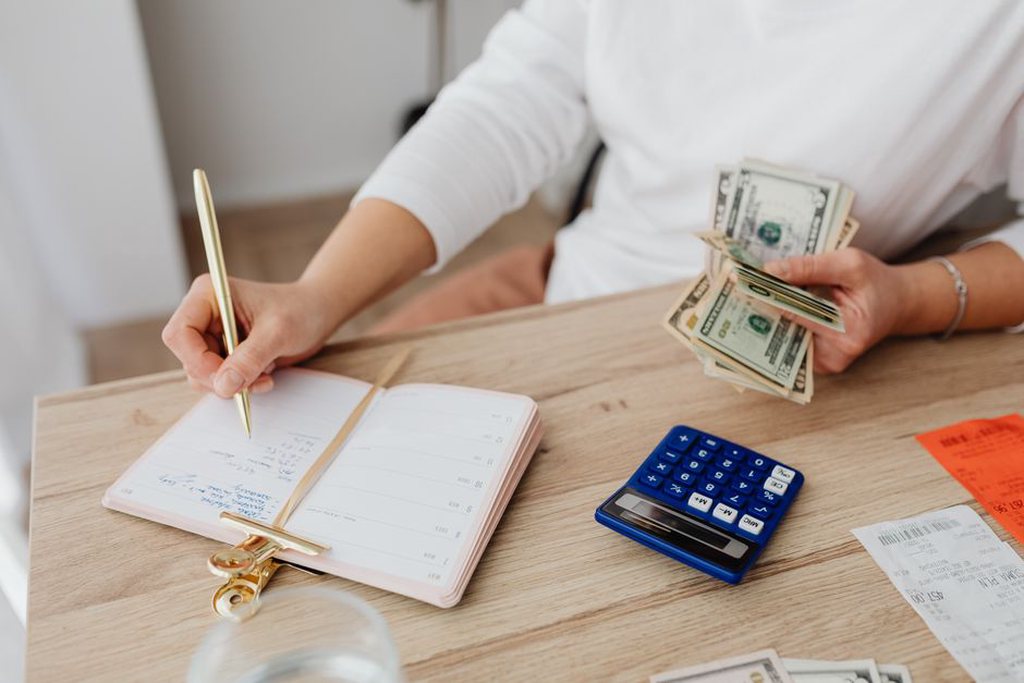
A pack of cardstock for one birthday card can turn into matching ink, adhesive and postage before you know it. Give paper crafting its own line in your monthly plan instead of hoping those purchases fit into whatever is left. A useful budget covers your obligations while making room for projects you enjoy.
These steps are general budgeting guidance, not individualized financial advice. Your income, obligations and priorities determine the amounts that make sense for you.
Start with money you can actually use
Write down your expected monthly take-home income—the amount that reaches your account after deductions. Count only income you can rely on. If your pay varies, use a cautious figure based on recent months rather than your best month, and treat anything above it as extra when it arrives. If you share expenses, decide whether this plan covers your contribution or the whole household. Use the same basis for both income and costs.
Then check recent bank and card statements, bills and cash receipts. Look back far enough to spot easy-to-forget spending, such as a quarterly membership or a stamp order you place every few months. The overview of personal budgeting describes the basic idea: a plan for income and expenses over a set period. Here, that period is one month.
Give every expense a useful category
Group costs in a way that helps you make decisions, rather than copying the labels on your bank statement. Put rent, utilities, insurance, minimum debt payments and other commitments under fixed costs, even if a bill changes a little. Give groceries, transport, household items and craft materials separate flexible amounts. Set aside money for savings or other goals if your circumstances allow.
Paper supplies need some detail, but this does not have to become a bookkeeping project. You might separate routine consumables, such as adhesive and envelopes, from optional purchases, such as a new stamp set. If you make birthday cards, put postage and gift packaging somewhere you will remember them. When money is tight, that distinction helps: you can use the supplies you already own without treating a new tool as essential.
Convert occasional costs into monthly amounts
An annual bill belongs in the plan even during months when it is not due. Divide a known yearly expense by 12 and set that amount aside each month: a $60 fee works out to $5 monthly. Use the same approach for predictable celebrations, equipment replacement and seasonal postage. If a payment is coming up soon and you have not saved for it, divide the amount by the number of months left before it is due instead.
Mark these set-asides separately in your notes or account records so they do not look like money available to spend. For uncertain costs, start with an estimate based on past receipts and revise it as you learn more.
Build the first version with real numbers
Subtract fixed commitments from expected income first. Then assign realistic amounts to flexible needs, occasional costs and other priorities. The plan needs to fit the income you chose; if it does not, adjust it before the month begins. Here is a hypothetical example with $2,400 in monthly take-home pay.
| Category | Monthly amount |
|---|---|
| Housing and utilities | $1,050 |
| Groceries and household items | $380 |
| Transport | $180 |
| Insurance and minimum payments | $260 |
| Occasional expenses set-aside | $140 |
| Savings | $130 |
| Paper crafting and postage | $75 |
| Other flexible spending | $185 |
The figures add up to $2,400, but that does not make them right for everyone. Higher essential bills might leave less for hobbies; irregular income might call for more money held back for a lean month. Build your first draft around the obligations you have, not a percentage you found in someone else’s template.
Leave space for imperfect estimates
Flexible costs rarely come out the same every month. If groceries usually cost $380, writing down $300 because it looks better creates a shortfall, not a saving. Start with recent spending, then choose a change you can actually describe—using the cardstock on your shelf before buying more, for example. If you cannot leave a general cushion, decide which optional category you would cut back if a variable bill comes in high.
Check the plan without tracking every minute
Choose a record-keeping method you will actually open: a notebook page, a simple spreadsheet or a budgeting tool you already use. At the start of the month, write the planned amount beside each category. Once a week, add your transactions and note what remains, not just what you spent. A ten-minute check is easier to keep up than reconstructing every purchase at month’s end.
Record the full cost of a craft order, including shipping. If you split an order with a friend, count only what you ultimately pay. Keep a short wish list beside the budget, too. By the next check-in, you may have a clearer idea of whether that die or stamp fills a gap in a planned project.

Adjust when the month changes
A budget is a working plan, not a test you pass or fail. If transport costs $20 more than expected, move $20 from an unspent flexible category and note the change. If transport keeps running over, give it more room next month and reduce another category. If income comes in below your estimate, revisit optional purchases right away rather than waiting until the final week.
At month’s end, compare planned and actual totals, then change only what the numbers support. Say your $75 craft-and-postage category ends at $92 because you mailed three cards. Check whether next month’s postage estimate needs another $17. The stamp set you did not buy can stay on your wish list until you have a specific project and room in the budget for it.


