
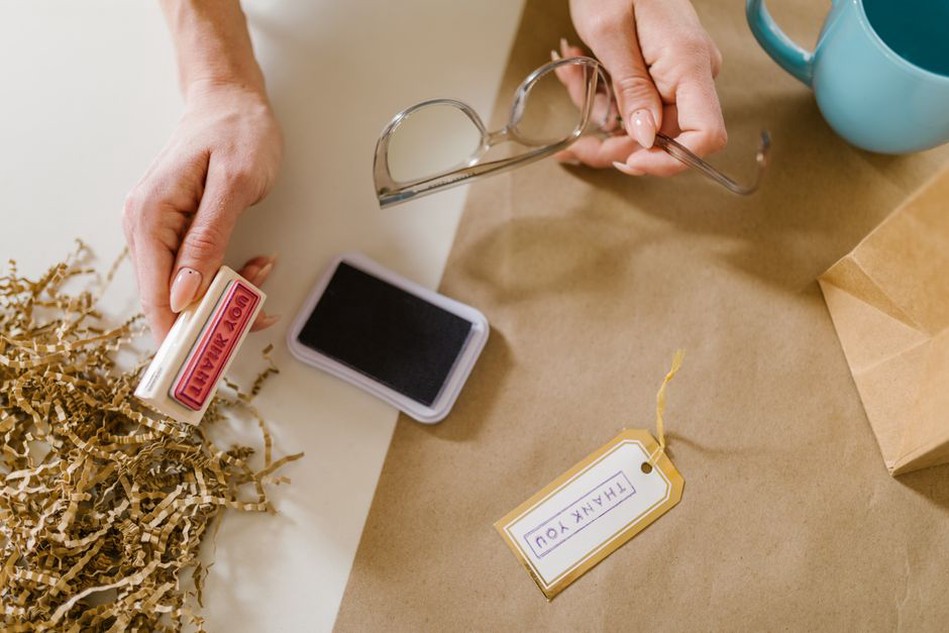
Put the lid back on the ink pad before you leave the craft table for the night. It takes a second, protects the pad, and saves you from dealing with a dried-out mess tomorrow. An evening routine can be just as small-scale: a few actions that finish today’s loose ends and make tomorrow easier to start.
For a paper crafter, that might mean clearing the cutting mat, setting aside materials for one card, or spending ten quiet minutes arranging scraps. It should work on nights when you don’t craft, too. The point is to make the evening easier, not give yourself another project.
Choose a starting point, not a perfect schedule
Think about when your evening usually changes pace: after dinner, when work ends, or once the household quiets down. Use that event as your cue instead of choosing an exact time you often miss. The same short sequence can begin at 7 p.m. one night and 9 p.m. the next.
For two or three evenings, pay attention to what happens after that cue. What do you waste time looking for? Which unfinished task keeps popping into your head? Mail piled on the craft table might bother you more than unsorted stamps on a shelf. Or your phone beside the cutting mat might be what keeps interrupting a project. Start with one snag rather than reorganizing the whole room.
Give yourself an endpoint as well. If chores and supplies need to be put away by a certain time, work backward from there. Leave room for ordinary interruptions, like washing a mug or helping someone find a notebook. A plan that only works when nothing interrupts you won’t be much use.
Make a short version for busy nights
Keep a five-minute version for evenings when that’s all you have:
- Put away anything that could be damaged or make a mess overnight: ink pads, wet glue, blades, and open drinks.
- Write down one thing you need to remember tomorrow.
- Clear a small usable area, even if the rest of the table stays untidy.
When you have more time, add a craft session, a longer tidy-up, or some morning preparation. On a busy night, the short version is enough. You’ve taken care of what matters most.
Give unfinished tasks a place to land
It’s harder to settle down when every unfinished task has to stay in your head. Keep a small notebook, an index card, or one notes page for a brief closing list. Write down actions rather than vague reminders: “cut two blue card bases” will be more useful tomorrow than “finish cards.” If you’re waiting on something, note the next step you can take, such as “check whether the adhesive has dried before layering.”
Only capture what you need tonight. This isn’t the time to plan every card idea or sort months of photographs. If an idea comes to you while you’re cleaning up, jot down one line and get back to it. “Sage, cream, rust; stamped leaves on kraft” is plenty to jog your memory later.
It also helps to separate what must happen before bed from what merely came to mind. A card needed in the morning may need an envelope and address tonight. A possible scrapbook page about last summer can wait. Otherwise, optional jobs have a way of looking urgent.
Reset the craft space just enough
When stamps, dies, offcuts, and embellishments cover the table, a full cleanup can take longer than the crafting did. Go for a safe, usable reset instead. Cover or store blades, close inks and liquids, and move fragile work away from food, pets, or a seat someone needs. Then clear enough space for your next card base or scrapbook page.
A tray or shallow box is handy for a project you haven’t finished. Keep the chosen papers, stamped pieces, and embellishments together, with a note about the next step. You can stop without losing the composition you took time to arrange. Give scraps one temporary container, too; narrow strips can be sorted by color another day if they start to pile up.
Before you leave, think about the first thing you’ll do when you return. To finish a stamped birthday card, you could set the dry panel beside its card base and chosen adhesive. Just don’t leave glue uncapped or a blade exposed for the sake of a quicker start. What helps is knowing your next step.
Choose evening craft tasks that are easy to stop
Creative time can help you shift out of the day, but some techniques are hard to squeeze into a short evening. A layered card with several drying stages may keep you at the table longer than you meant to stay. Try a task with a clear stopping point:
- Stamp a small batch of motifs. Stick to one ink color and one sheet of paper, and let the impressions dry before storing them.
- Cut card bases or simple shapes. Decide on the size first and drop offcuts into one container.
- Test a color palette. Put three or four papers together, then take a quick photo or write down their names.
- Arrange a layout without attaching it. Place photos and paper layers on a scrapbook page, then preserve the arrangement in a tray or folder.
- Make one envelope-ready card. Pick a design without uncertain drying time, and check that the decorative layers fit the envelope.
Decide when you’ll stop before you begin: after one card front, ten stamped shapes, or one layout trial. I find this especially helpful when choosing materials is half the fun. A quick hunt for matching paper can otherwise turn into a late-night drawer overhaul.
Keep decisions smaller when you are tired
Late evening may not be the best moment to choose among six patterned papers and three focal images. Narrow your options in advance. A small kit with two coordinating papers, a neutral, a stamp set, and a few embellishments still gives you plenty to work with. Try changing the layers or cut shapes before pulling out more supplies.
Save precise measuring and careful knife work for a time when you’re alert and the light is good. If you’re tired, arranging pieces or trying a color combination may be more enjoyable. Leave the fiddly step for your next session rather than risk damaging a piece you like.
Build a transition away from screens and chores
Going straight from messages or household jobs to bed can make the day feel unfinished. A brief transition can help mark the change. Put your phone out of reach for a set craft period, wash your hands after using ink or glue, and switch on a light that’s comfortable for close work. When you stop, put away the tools and change the lighting or leave the table. No rigid timetable required.
Crafting needn’t fill that role every night. Reading, listening to something gentle, or sitting with a warm drink may suit an exhausting day better. If you’d rather spend time with others, a [relaxed family game night](/plan-family-game-night-everyone-can-enjoy/) offers ideas for keeping shared play easy to host. Whatever you choose, keep the preparation modest.
Notice, too, if crafting starts to feel like homework. You don’t have to finish a card every night. Make a few test impressions on scrap paper, try two arrangements of the same cut shapes, or put away supplies from an earlier session. Practice and preparation count as creative time.

Make room for the people and routines around you
If your craft surface doubles as the dining table, decide when it needs to be free again and pick a project that fits in a tray. Save noisy cutting tools or a loud heat tool for another time if someone is sleeping nearby. And if children or pets share your space, store sharp tools, small embellishments, and adhesives where they can’t reach or knock them over.
Talk about the practical details instead of assuming everyone wants the same kind of quiet. Someone might enjoy sitting nearby while you make a card; someone else might need the table. Agreeing to clear one end after a short session may work better than trying to reserve an uninterrupted hour that rarely happens.
Match the project to your space, too. A portable folder with card blanks, a few papers, and a pencil lets you work without spreading out stamps and ink. If setting up takes fifteen minutes and you only have twenty, choose a task with fewer tools. You’ll be able to pack it away when the table is needed again.
Use comfort as a guide, not another checklist
Pay attention to what makes the last part of the day uncomfortable. Glare on a glossy scrapbook page can make detail work tiring; a directed lamp may help you see the layers and stamped outlines. A cramped chair or a crowded table can take the pleasure out of a simple task. Change one thing at a time before buying new organizers.
These budget suggestions are general guidelines, not individual financial advice. Before purchasing containers or tools for your evening setup, try what you have: a shallow box for an unfinished project, an envelope for cut shapes, or a spare jar for pens you use often. Give it a week and see whether a different storage item would solve an actual problem.
If you regularly have trouble falling asleep, don’t expect a craft routine to fix it. A bright, absorbing project that runs late may be fun without feeling restful. Try moving intricate work earlier, stopping at a set point, and saving something quieter for later. Persistent sleep concerns are worth discussing with an appropriate health professional.
Try the routine for a week and revise one part
For the first week, choose a starting cue, a short closing list, and a five-minute workspace reset. Craft only on evenings when it fits. At the end of each night, notice whether you stopped at a comfortable point and left the table ready for its next use. A few words beside the date are enough; you don’t need a detailed tracker.
After several days, adjust the part that keeps tripping you up. If putting supplies away takes too long, bring out fewer. If the closing list becomes a plan for your entire tomorrow, limit it to one or two actions. If a ten-minute project keeps lasting an hour, make the stopping point smaller or start earlier. Keep what makes the next morning easier.
Tonight, you could put one card base and two coordinating scraps in a tray, close the ink pad, and leave a note: “choose a focal stamp.” The card will be ready when you have the light and time to pick it up again.


